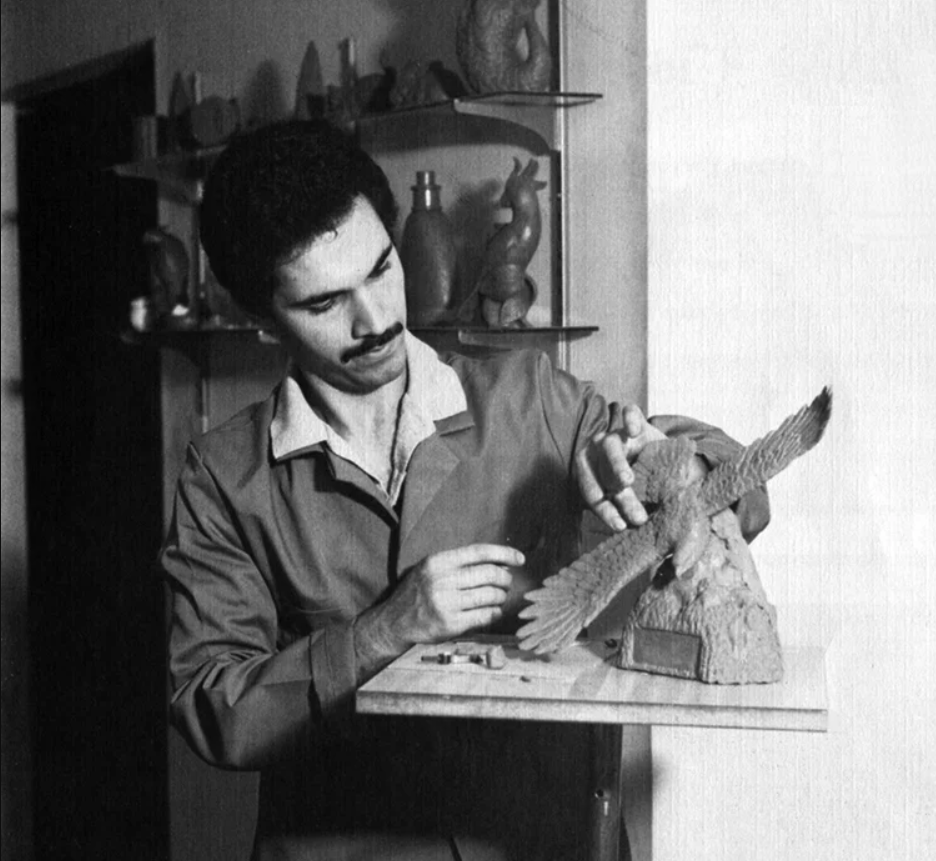
“My father never sat down and said, ‘I’m going to build a prototype company.’ He just kept making things people couldn’t find anywhere else.”
John UtleyVice President
“It all started in our Forest Hills basement.”
Before Utley’s became a multi-generational prototype and packaging company, it was simply a father and son experimenting with acrylic scraps in a basement in Forest Hills.
John Utley’s grandfather worked for DuPont in the 1940s and would occasionally bring home pieces of clear acrylic, Lucite at the time, for his son to play with. Together, they carved shapes, tested ideas, and learned how the material behaved. None of it was formal.
“It all just kind of happened,” John said.
Then one project changed everything. An advertising agency developing a nail polish campaign needed a transparent high heel so the model’s painted toenails would remain visible. They found John’s father and asked whether he could make one. Starting with a flat sheet of acrylic, he carved the shoe entirely by hand, transforming a two-dimensional pattern into a sculpted, glass-like form.
The advertisement ran nationally, and unexpectedly, women began calling magazine editors asking where they could buy the shoes.
Soon after, John’s father was walking through Madison Avenue advertising agencies carrying hand-carved bottle concepts under his arm. Agencies would purchase models on the spot and use them to develop new packaging designs. Utleys was incorporated in 1956.
“Staff worked in the basement, and my grandmother would make dinner for everyone at the end of the day.”
At a time when consumer packaging was rapidly evolving, John’s father became part sculptor, part engineer, and part industrial designer. Brands including Revlon came to him for prototype bottles and cosmetic packaging concepts long before modern digital rendering existed. He carved physical forms by hand, which manufacturers then used to create glass, ceramic, or injection-molded products at scale.
Eventually the operation outgrew the house and moved into a series of spaces on East 61st Street, where the business remained for decades.
John joined the company in 1996, a few years after his father passed away. His brother had already begun restructuring the business, and John stepped in to modernize operations from within. “He’s in the business,” John says of his brother. “I work on the business.”
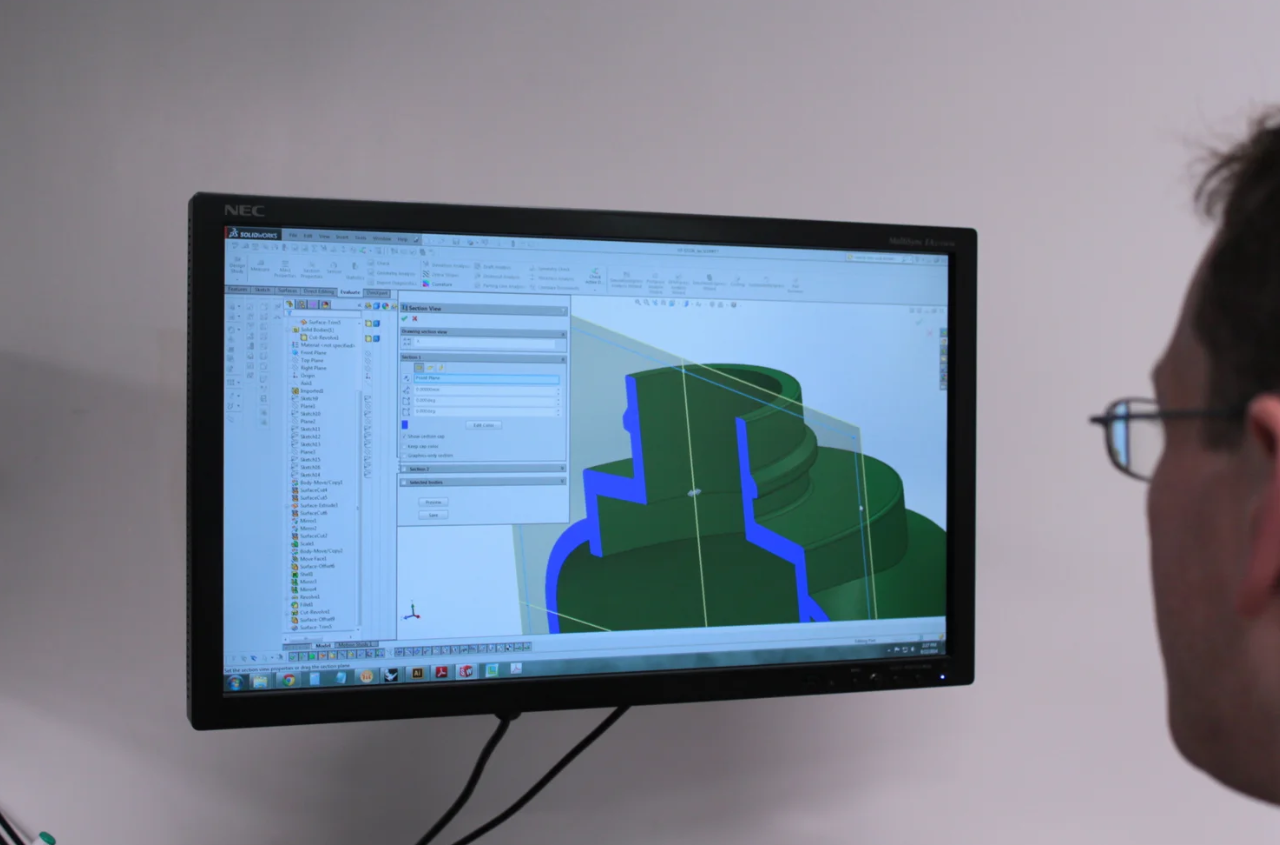
Coming from a larger corporate environment, John helped digitize systems, improve workflows, and guide the company from its highly analog roots into a more modern operation. Over time, Utley’s expanded its CNC capabilities, adopted CAD software early, and integrated in-house 3D printing as the industry shifted toward digital production.
Operating in New York forced the company to evolve faster. “We couldn’t compete the same way shops in lower-cost regions could,” John explained. “So we had to become smarter technologically and build stronger partnerships.”
That mindset shaped the company’s next phase. In 2020, the company merged with Garrett Clifford Design, expanding from primary packaging into secondary packaging, and creating a more comprehensive prototyping operation.
“We’re always evolving. That’s how this business was built.”
Today, Utley’s is led by second and third generation family ownership, with John, his brother, and his niece all helping guide the company forward.
The company now handles a wide range of prototype and packaging development work, from primary packaging models to scalable secondary packaging systems, combining traditional craftsmanship with digital production tools, engineering workflows, and rapid prototyping technologies.
Even after seventy years, the business continues to adapt. John is currently focused on operational improvements across the company, including AI integration, ERP modernization, updated estimating systems, and workflow improvements designed to help scale the business for the next generation. And despite all the technology changes, some things still feel familiar. “Problem solving is really what my father was doing in the basement all those years ago,” John says. “And at the end of the day, it’s still what this business is all about.”