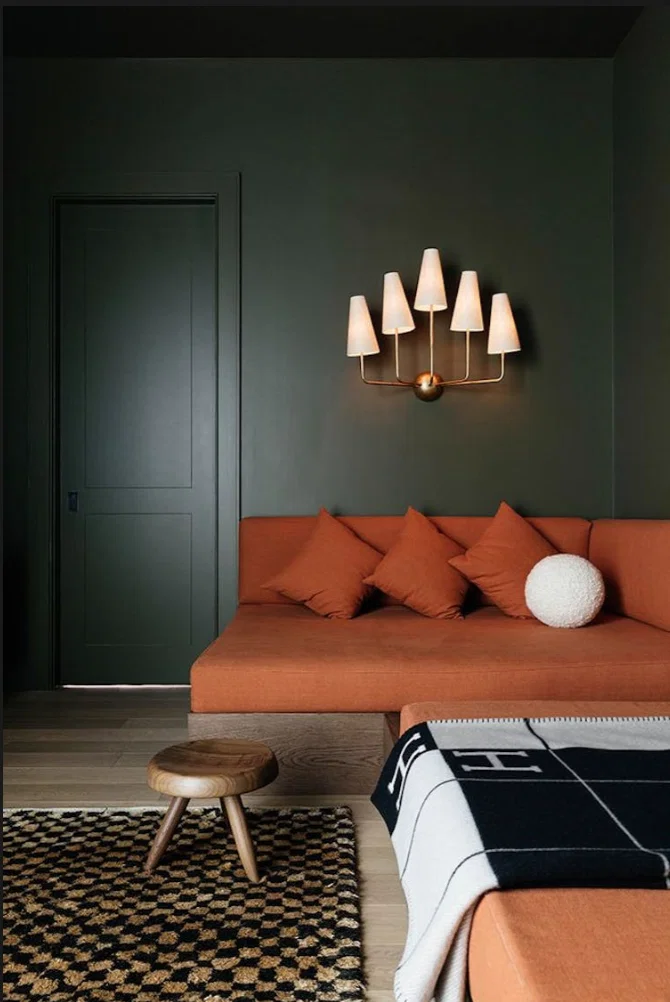

“I've always been someone who wants to know how things are made.”
Ella HallFounder
“I was one of those kids who was always making something.”
Growing up in a small town in Wisconsin, Ella Hall often found herself dreaming about clothes she saw in magazines but were impossible to find where she lived. Some kids might have accepted that. Ella decided to learn how to make them herself. “When I was about seven, I got my first sewing machine from Santa.”
As she got older, she bought fabric with babysitting money and experimented with whatever she could find around the house. “I would spend hours at Joann Fabrics. It was my happy place”, she says. Ella upholstered an ottoman she found on the side of the road using an ordinary office stapler because she didn’t own a staple gun. She glued gems on sneakers and even took the curtains from her parents’ living room to sew her homecoming dress. Her parents, both accountants, couldn’t quite explain where her creative instincts came from, but they encouraged them anyway.
Everything changed after a family trip to New York City in eighth grade. “We were staying in Times Square, and I was like, ‘What is this? This place is amazing. This energy is incredible.'” She knew where she wanted to be.
After briefly convincing herself to follow a more traditional college path, she changed course at the last minute, built a portfolio over one week, applied to art school, and headed to New York.
“I just kept figuring out the next step.”
Ella began working in fashion after school, but the career she imagined wasn’t quite what she found. As she moved through different roles, she started paying attention to something bigger than clothing itself. She loved creating, solving problems, and understanding how products came together.
In 2015, she accepted a client services position at a young interior design startup. She quickly noticed that many designers struggled to find reliable fabricators for custom soft goods. She knew how to sew and began taking on projects after work, starting with pillows.
It started simply. Designers would drop off fabric, she’d cut and sew custom pillows after work in her StuyTown apartment. The extra income helped, but what really caught her attention was the opportunity. “I thought, there’s actually something here.”
The business grew slowly and organically. “I remember making enough money to pay my rent consistently for three months. That was the moment I knew I would try to make this a real thing.”
As more designers found her, the apartment slowly disappeared beneath rolls of fabric, foam, sewing machines, and finished pieces waiting to be picked up. Every evening became a race to clean everything before her roommates got home. One night, her roommate stepped on a needle accidentally left out. “It was time to figure something else out.”
But she still wasn’t ready for a traditional workshop. After moving to Brooklyn with her now husband, she continued operating out of their apartment for another two years while building a small network of freelancers. When she finally rented her first workspace, the office was barely large enough to hold supplies. When she needed to cut fabric she rented the building’s conference room and worked off their table. She carried a couch the needed to be reupholstered onto the subway. She worked without air conditioning in the summer.
Each move brought a little more room, but it never seemed to be enough. As the work evolved, so did the business. Every new space allowed Stitchroom to take on projects that had been impossible in the previous one.
“I never said no. Every time a request came in, I thought, ‘I don’t know how to do this, but I’m going to figure it out.'”
As projects continued getting larger, Ella rented bigger spaces, learned new fabrication techniques, and expanded Stitchroom’s capabilities one request at a time. Her first clients also grew alongside her. They began asking for drapery, then upholstery, then increasingly complex custom furniture. Instead of turning projects away, Ella found a way to do them.
Eventually, she moved to The Navy Yard, sharing space with a milliner who she often partnered with. When they closed, she took on the full lease and continued expanding.
Today, Stitchroom is far more than an upholstery shop. The company partners with interior designers, architects, hospitality groups, and furniture brands to fabricate custom seating, upholstered furniture, drapery, cushions, wall panels, and one-of-a-kind installations.
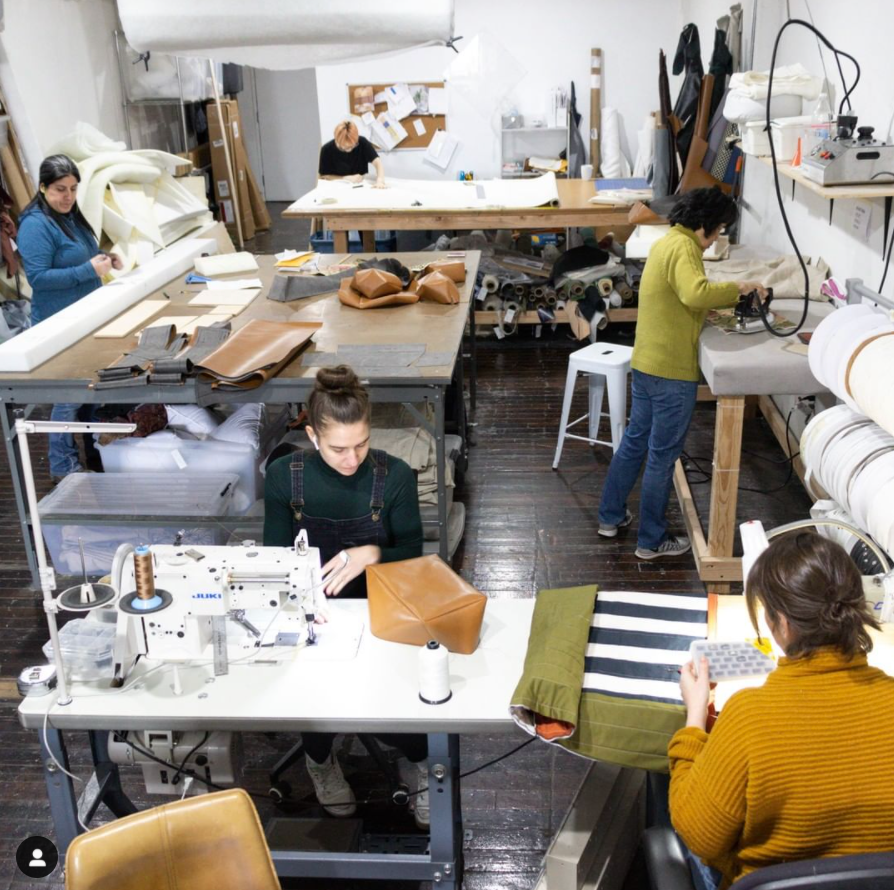
The company now works across upholstery, custom furniture, drapery, millwork and frame fabrication for one-of-a-kind installations. What started with pillows for a few designers has grown into a full-scale fabrication partner for interior designers, architects, hospitality teams, and artists. Projects now move through a coordinated shop floor rather than a living room, with the capacity to handle complex, multi-phase work like large installations and cross-country commissions.
That growth has been matched by a shift in how the company is built and run. From the beginning, technology was not an add-on but part of the direction. Systems for tracking, production visibility, and client communication sit alongside the hands-on craft of cutting, sewing, and building. As Ella describes it, the goal has always been to make the work easier and more precise, not more complicated. Over time, that mindset has shaped both the team and the process, creating a shop that is as comfortable solving operational problems as it is solving design ones.
Looking ahead, Hall describes a business that is moving out of its early experimental phase and into a more confident chapter. The next few years are focused less on proving what is possible and more on refining how it is done, with continued investment in technology, fabrication capabilities, and partnerships across disciplines. As manufacturing and hands-on production regain attention in a more digital world, Stitchroom sits at the intersection of both, combining craft, scale, and systems in a way that reflects where modern fabrication is heading.