“It started as a migraine, not a business plan.”
Julie Maskulka Founder
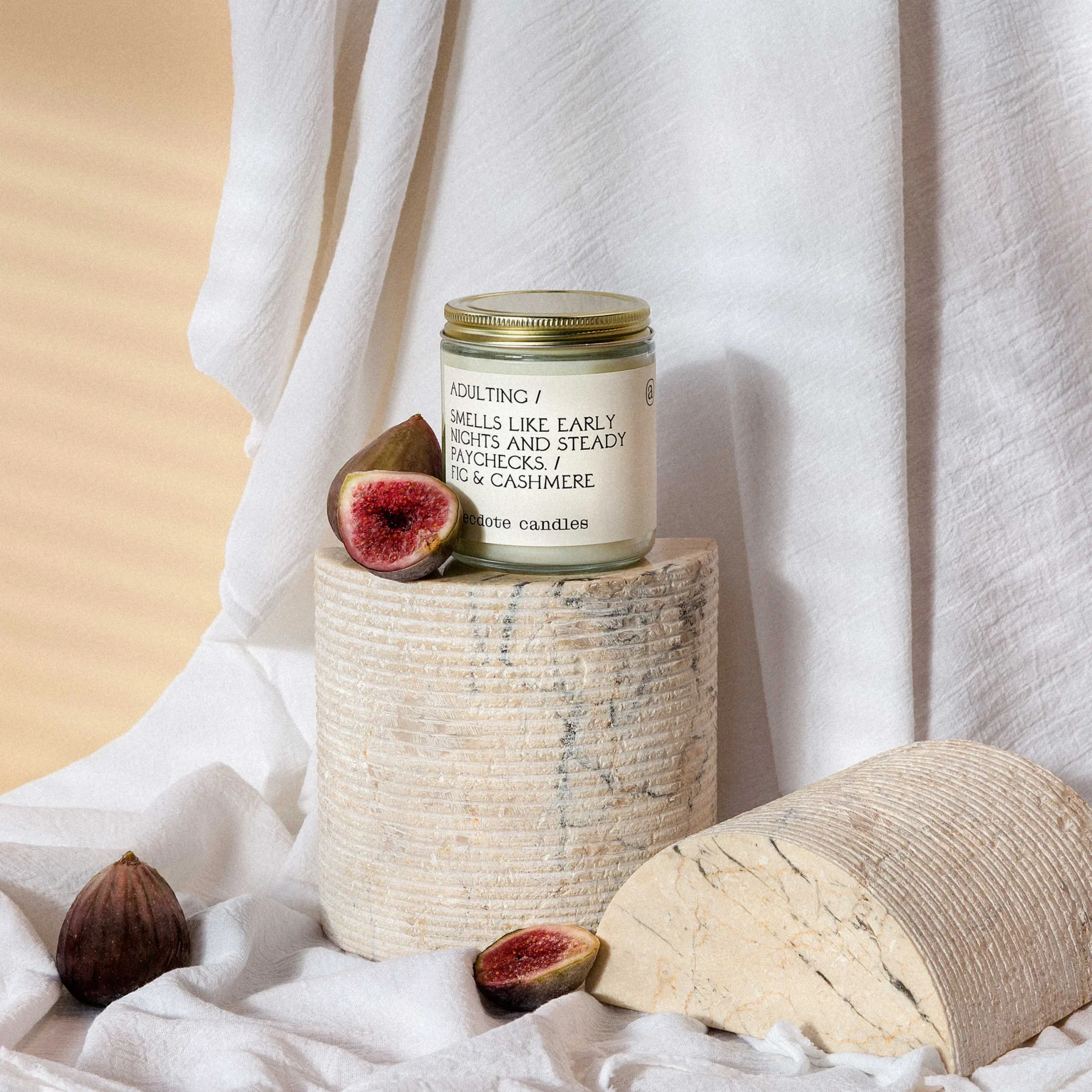
Julie Maskulka started making candles at her kitchen table, more out of curiosity than ambition.
She had been working long hours at a creative agency when a store-bought candle triggered a migraine. “I went down a rabbit hole about why candles can give you headaches,” she says. “I found myself on a Reddit thread about making candles and thought, why not try it? I bought some supplies and started experimenting at home.”
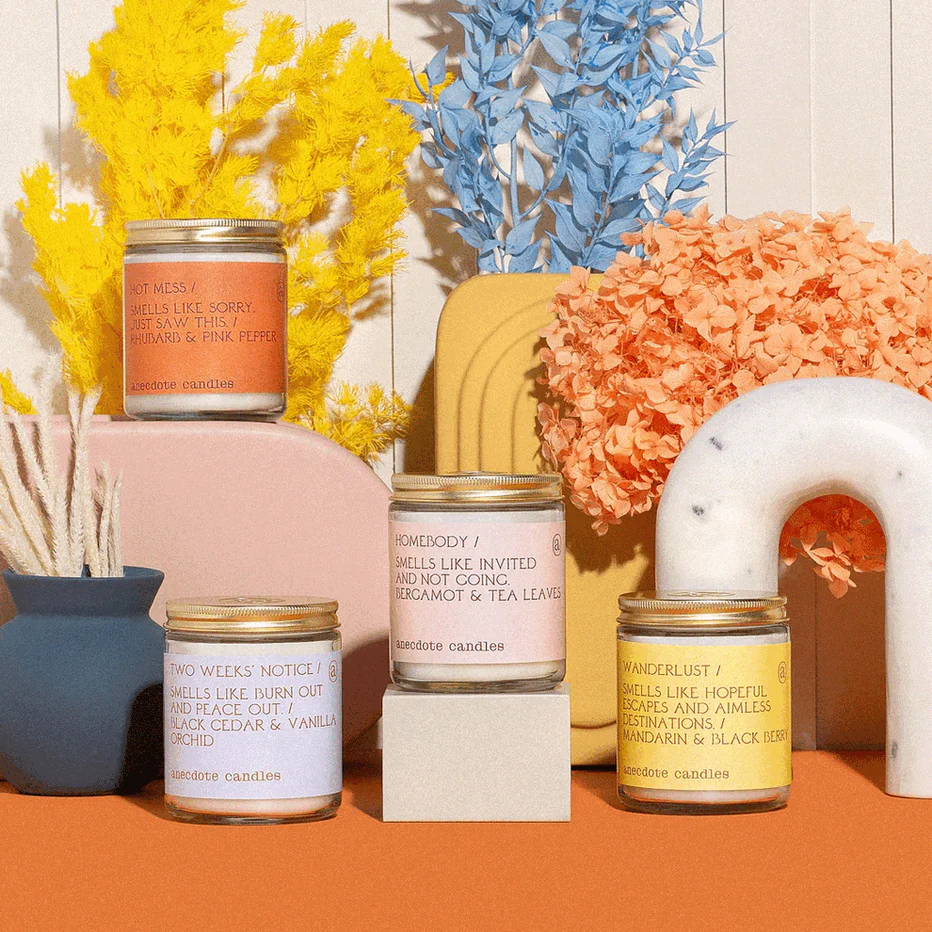
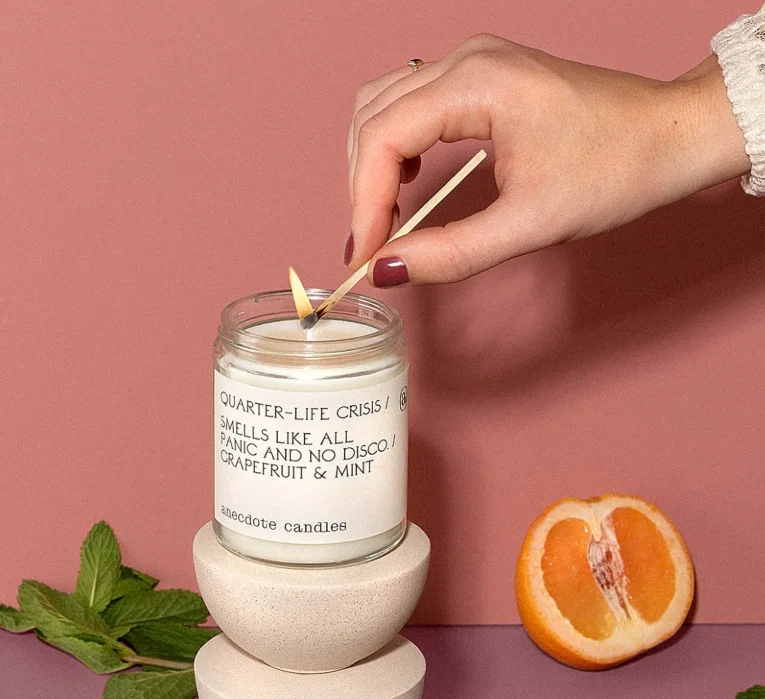
Her early blends were inspired by moods, memories, and moments in her own life. When she paired those scents with playful “smells like” anecdotes at her first pop-up, people immediately connected. “The labels made people laugh or nod in recognition. They felt like inside jokes, but they also smelled good. That’s when I realized that it wasn’t just a scent. It was storytelling.”
“I just kept doing what was possible inside the limits I had.”
Time was her first constraint. Still working full-time, weekends were the only chance to move the idea forward. The trade show gave Julie deadlines to hit: a website to launch, packaging to design, and candles to pour. That work also helped her land their first wholesale accounts from major retailers. “Wholesale felt natural. It was a contained thing I could focus on,” she says. “But it also gave us credibility and press. Being on Nordstrom’s holiday list helped us get featured everywhere from The Cut to affiliate gift guides.”
By 2020, Anecdote had both wholesale momentum and a growing online community. Paid ads, influencer partnerships, and a steady stream of press put the brand in front of thousands of new customers looking for comfort, humor, and connection during lockdown. Julie gave them all three in a candle.
As demand grew, custom labels became one of Anecdote’s most-requested features. “People wanted to tell their own story,” Julie explains. “The candle itself mattered, but the label made it personal.” Outsourcing made that impossible, and when quality issues emerged, the decision was clear. In 2021, production moved fully in-house.
Since then, the team has poured more than half a million candles at its Brooklyn facility. “It’s not easy,” Julie admits. “Building the right team and culture takes time. But owning the supply chain gave us control, flexibility, and the ability to say yes to custom in a way that felt authentic.”
“Now it’s about doing less but doing it better.”
Even as Anecdote grew, Julie noticed the same pattern as in the early days: the brand thrived when it leaned into its constraints. “Wholesale gave us credibility and stability. In-house production gave us quality and flexibility. Every limit forced us to focus on what really mattered.”
Today, Anecdote is careful about how it grows. Instead of chasing every retailer, the team deepens relationships with the right partners. Instead of trying to be everything to everyone, they are exploring opportunities like corporate gifting with the same focus and intentionality that shaped the brand from the start.
Candles may be universal, but Anecdote makes them feel personal — with a scent, a story, and often a laugh. “People tell us they buy a candle because they felt called out by the label, and then they’re thrilled it actually smells amazing too,” Julie says. “That combination of humor, quality, and meaning is what keeps them coming back.”
For Julie, it all comes back to constraints. “At the beginning, the limits of my time and space shaped every decision. Now, I’m setting those limits on purpose. Growth doesn’t mean more for the sake of more. It means focusing on what feels right and letting the rest go.”