“We embrace tradition, but we’re not traditional.”
Michael MarinoCo-Founder
Michael was working in architecture. Jorge, his partner, was in advertising. But neither felt connected to the work.
Both were ready for something new when Michael started documenting his mom, Nonna Carolina, in the kitchen. She had recently retired and taken a job at a local restaurant. It wasn’t a career move. It was a return to something she had always loved.
Nonna Carolina was born and raised in Calabria, Italy, and moved to Brooklyn in the 1970s. She brought with her the same values she had grown up with: cook what’s in season, waste nothing, and feed your family well. Michael was raised on those lessons. His parents grew herbs and vegetables in their backyard. Preserving tomatoes in August was just part of life.
Out of curiosity and career apathy, Michael started filming his mom in the kitchen. He shared the clips online, not thinking much of it. But people connected with her. Carolina’s style was confident and familiar, and the audience kept growing. That small project turned into pasta-making classes, then festival appearances. Eventually, the family began selling small-batch sauces and condiments.
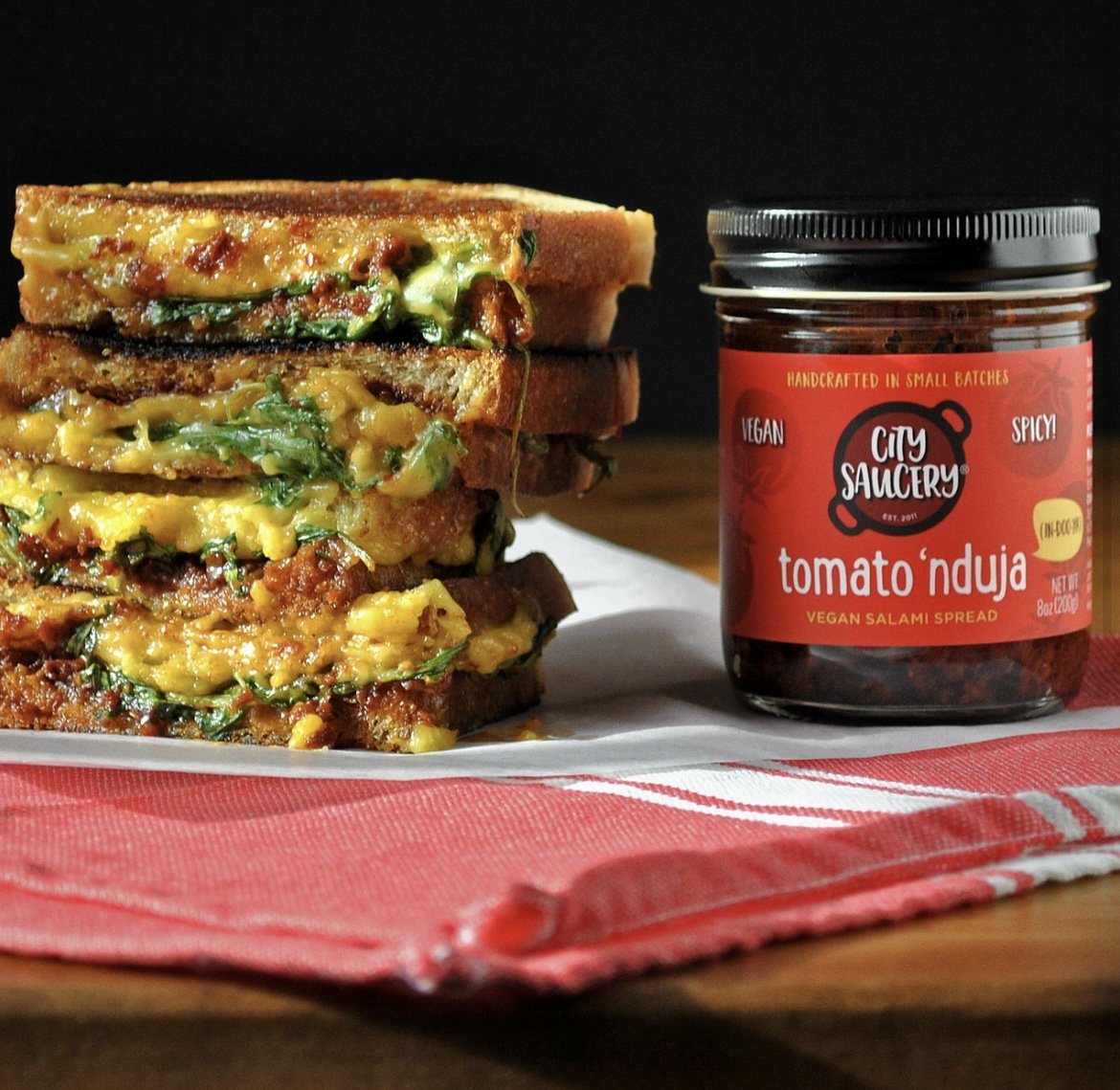
In 2017, their vegan tomato ’nduja, based on one of Carolina’s original recipes, took home a SOFI Award for Best New Condiment.
Retailers noticed. A business was taking shape. “It just escalated from there”, Michael explains. City Saucery got in at the right time and quickly built traction.
Early on, the company jumped straight into wholesale. As demand grew, they worked with a co-packer to scale production. But the partnership didn’t last. The team faced a choice. Either wind the whole thing down or take over production themselves. They chose to double down. When space opened up at the Brooklyn Army Terminal, City Saucery moved in. It was zoned for food manufacturing and already home to friends and fellow makers. They bought their own equipment, changed their branding, and fully rebuilt the business around a direct-to-consumer model.
From the beginning, City Saucery built their products around what others overlooked.
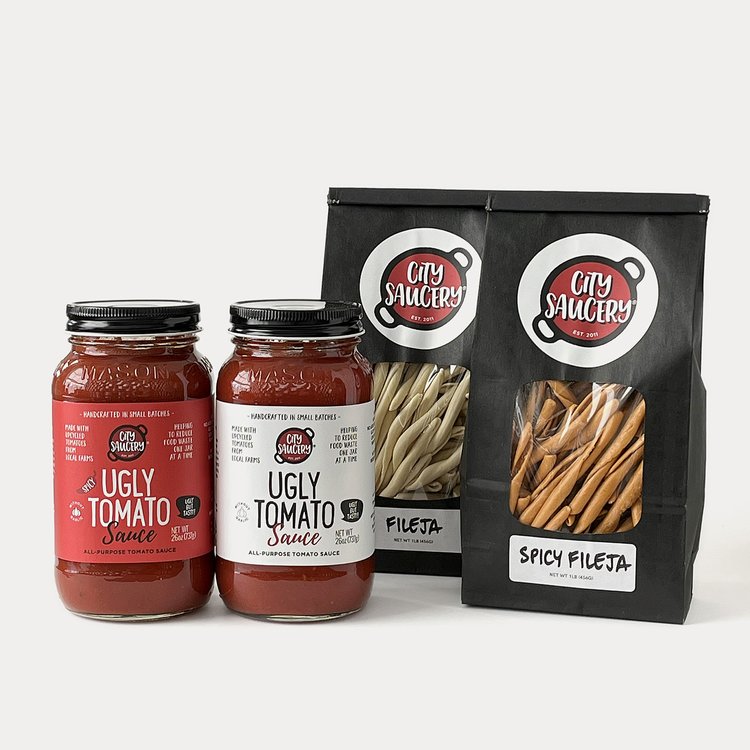
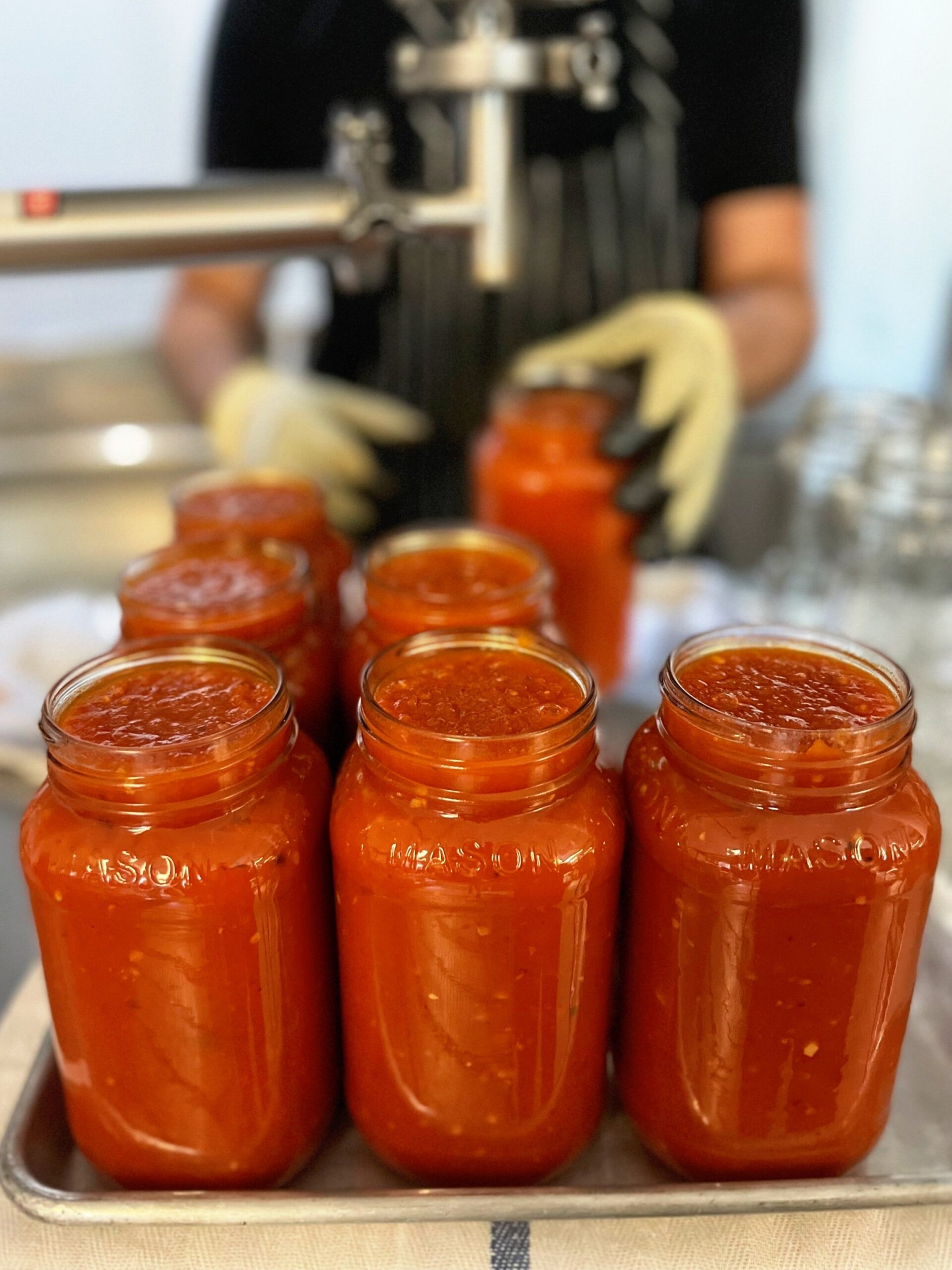
They source imperfect, overripe tomatoes from nearby farms, the kind grocery stores reject because they’re not pretty enough for display. But these are the tomatoes that cook down best. “It’s not about food waste for the sake of a headline. This is how how you get the best flavor and how we’ve always cooked.”
The company now offers a full line of sauces and spreads, each made in-house from scratch. Some, like their vegan tomato ’nduja or vegan Calabrian Bolognese, are proudly labeled for vegan eaters. Others are simply seasonal staples rooted in the family’s Calabrian heritage.
Today, City Saucery ships nationwide and remains a fixture at NYC’s Greenmarkets. Their return and reuse jar program is a core part of their low-waste model. Customers can bring back empty jars and get a discount on the spot. Each one is sanitized and reused, and hundreds have already gone through the cycle. “We want to build something that’s sustainable in the real sense,” Michael says. “Not just in how it’s marketed, but in how it actually works.”
The team continues to grow strategically, with hopes for international shipping on the horizon. But the philosophy hasn’t changed. Use what’s good. Preserve what’s seasonal. And build a business around care — for the ingredients, for the customers, and for the future.