
David G. Flatt Furniture, LTD
“I've been working with wood since I was a kid, watching my father build things from nothing.”
David FlattFounder
“The idea stuck with me early on, that if something needed to be made or fixed, you could always figure out how to do it.”
David’s relationship with woodworking started early, at home. His father worked with wood regularly, building birdhouses, bowls, and occasional construction projects in their postwar suburb. Those early experiences shaped how he understood raw materials, as something you could change and bring to life. It was just what you did when you had material, tools, and something to build.
By the time he was ten, Flatt had already decided he wanted to be a carpenter. The logic was simple to him. You start with wood, sometimes just sticks of it, and over time you build something real, a structure, a house, a usable object. What mattered was the connection between material and outcome. That early exposure created a sense that making things was not abstract or distant. It was practical, visible, and repeatable.
There was also something important in watching the full cycle. As a child, he saw raw material become structure, and then the finished homes eventually occupied by people he came to know. That overlap made construction feel less like an industry and more like a continuous line from material to life.
Even though he had a plan since childhood, the path wasn’t straightforward.
“I went to college but didn’t really know why I was studying biology and chemistry.”, David says. He soon realized it wasn’t the right fit and left school for a job at Chrysler, contributing to the production of automotive seating, which introduced him to manufacturing and problem-solving at scale. It was still fabrication, just in a more industrial and structured environment. But he felt like something was missing and eventually re-enrolled in school, this time pursuing a BFA at Northern Michigan University, with a concentration in sculpture.
There, he worked in bronze casting and ran the university woodshop, developing both technical skill and a deeper understanding of materials and form.
“I started to understand how things are made at a fundamental level,” he says. “Whether it was wood or metal, the process mattered.” This became a turning point. Woodworking and metalworking came together in a more intentional way, and he began to understand making as both craft and design.
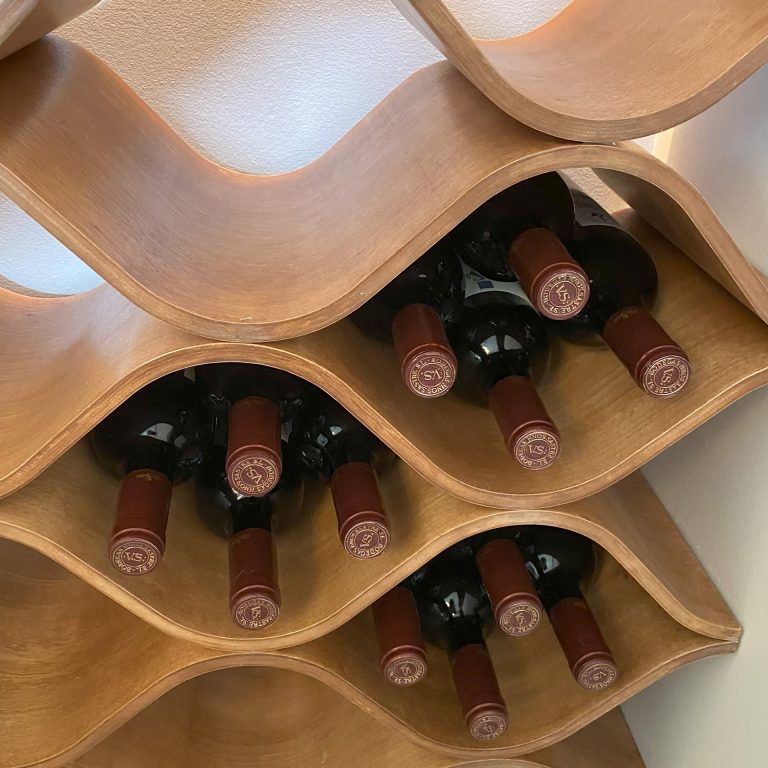
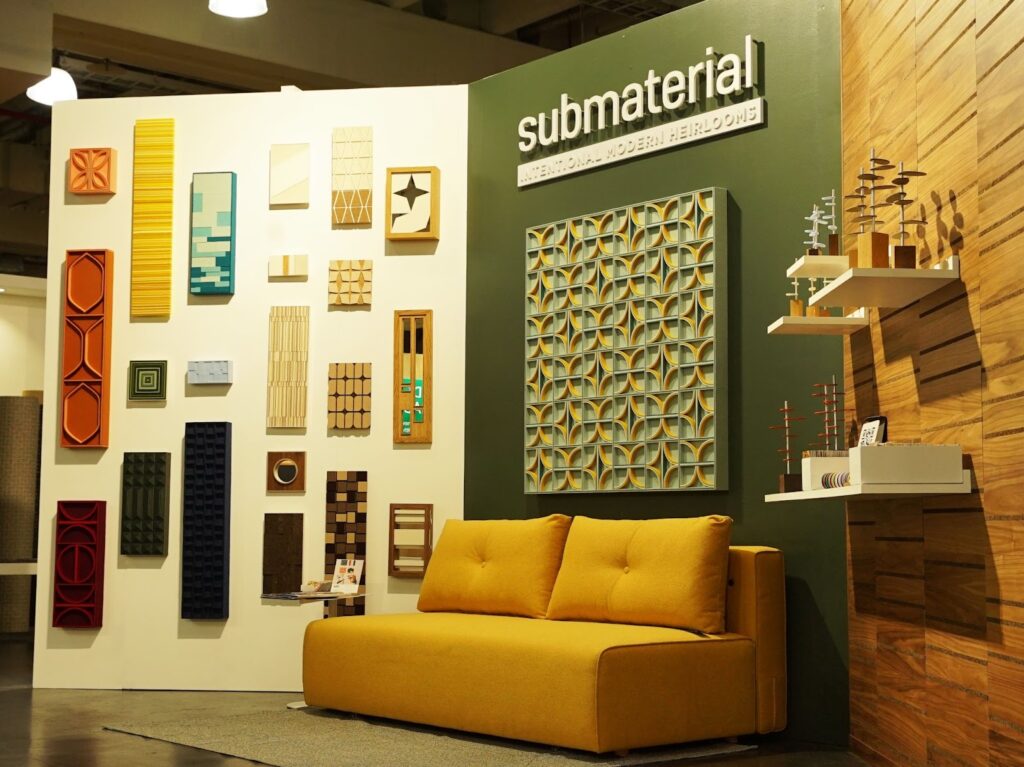
After completing his undergraduate work, Flatt continued to build his skills through hands-on experience, apprenticing with a furniture maker and producing his own work for craft fairs and art shows. By 1980, he was ready for another change, enrolling in industrial design at Pratt Institute and relocating to New York City. Here, he worked with designers and furniture companies before launching his own business in 1985. What began as custom furniture and fabrication work gradually expanded into trade show exhibits, a field that would become a major focus.
“Trade shows are completely different. You’re designing something thousands of people walk into at a specific moment. You have to understand what a company is trying to communicate and build that into a physical space.”
Unlike furniture, which is experienced in static environments, trade show design require David to think about movement, messaging, and timing. Each project involves working closely with clients to understand what they want to communicate and how people will interact with the space. The work demanded fast decision-making, adaptability, and the ability to execute under strict deadlines. It also created a reliable cycle of returning clients, with companies coming back year after year to redesign and rebuild their presence.
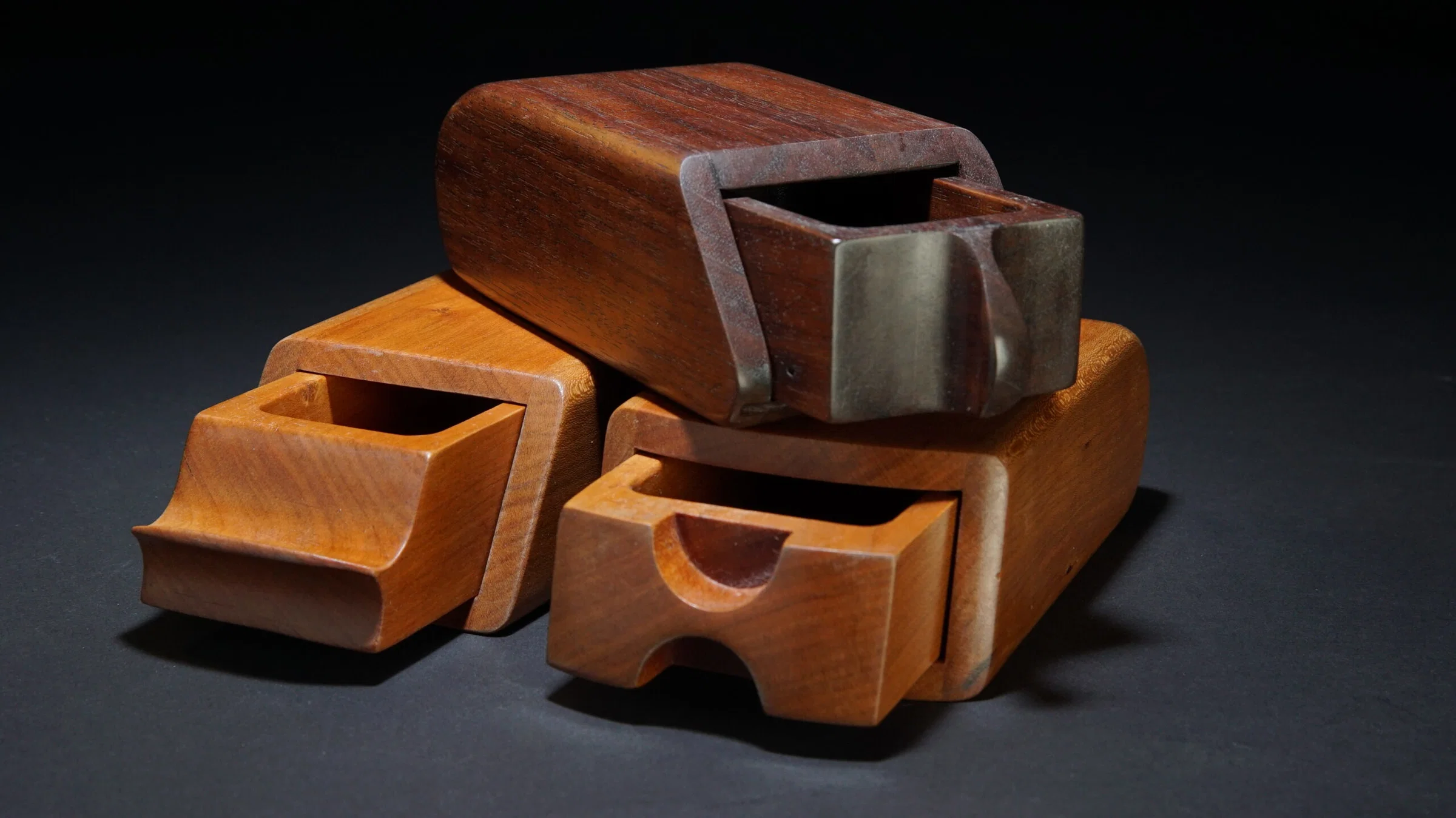
In recent years, Flatt has begun shifting his focus again, returning to the kind of studio work that first drew him to woodworking. While overseeing his fabrication business, he has found time to explore smaller, more personal projects, particularly hand-held wooden boxes. This work is driven by curiosity and a desire to reconnect with the material itself, often wood from previous projects or material he has collected over time. The scale of the objects allows for a level of precision and attention to detail that is difficult to achieve in larger work.
For David, these boxes are not about function in the traditional sense, but about interaction and observation. They invite the viewer to pick them up, open them, and examine how they are made. At the same time, they place him back within a broader community of makers, where the work becomes part of an ongoing dialogue about craft, process, and form. His work continues to sit in that space between craft, design, and material understanding, shaped by decades of moving between furniture, industrial production, sculpture, and architectural environments.