
“It started with trying to impress each other through food.”
Gloribelle PerezCo-Founder
“At first, Walid’s Tunisian food was just too spicy for me.”
Harissa Hot Honey began in two small New York City kitchens, where very different food traditions met at the same table. Gloribelle is from the Caribbean, where food is full of flavor but not particularly spicy, while her husband, Walid, is from North Africa, where harissa’s heat is a staple of everyday cooking.
Early in their relationship, food became the way they learned about each other’s cultures. Harissa was unfamiliar to Gloribelle at first, and often too intense on its own, but she kept cooking with it anyway. “We would blend it into marinades,” Gloribelle explains. “We both had these George Foreman grills in our little apartments, and we’d make chicken, steak, and shrimp with honey and harissa to keep the flavor but balance the heat.”
Over time, the pairing became second nature. The honey softened the heat of the harissa, while the harissa added depth and complexity to the sweetness. What started as experimentation quickly became part of their everyday cooking.
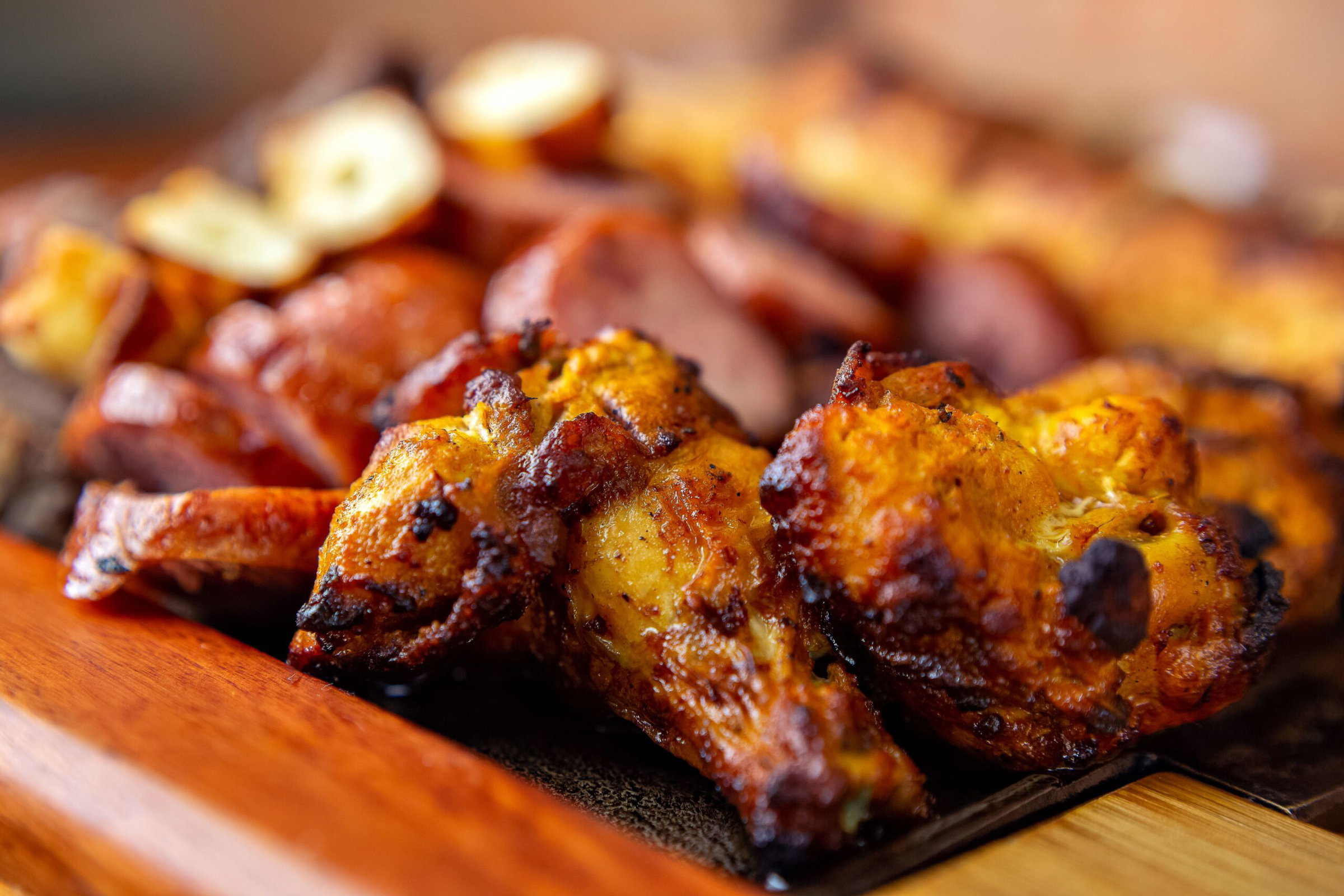
Eventually, what began at home made its way into a restaurant kitchen. Just before the pandemic, the couple opened a restaurant in Harlem, bringing those same flavors to customers for the first time. There, harissa hot honey became one of the restaurant’s signature ingredients. Wings glazed in the blend quickly became a favorite, along with roasted vegetables and marinades built around the same sweet-heat profile.
“People wanted to take it home.”
When guests started asking for it outside the restaurant, it did not feel like a marketing opportunity. It felt like a signal. And when the restaurant closed during the pandemic, that signal became the business.
What had started as a restaurant ingredient needed a new form, but the idea remained the same; people had simply already decided they wanted it in their kitchens.
Harissa Hot Honey became New York City’s first gourmet hot honey brand, built directly from that restaurant experience and the demand that followed it beyond the dining room. Today, it is sold nationwide through harissahothoney.com and through a growing network of specialty food retailers across New York City. From neighborhood markets to iconic institutions like Sahadi’s and Zabar’s, each new placement has felt less like expansion and more like becoming part of the region’s food culture.
“It’s not just honey and peppers – thanks to the garlic, coriander and caraway in harissa, it’s the first hot honey with flavor.”
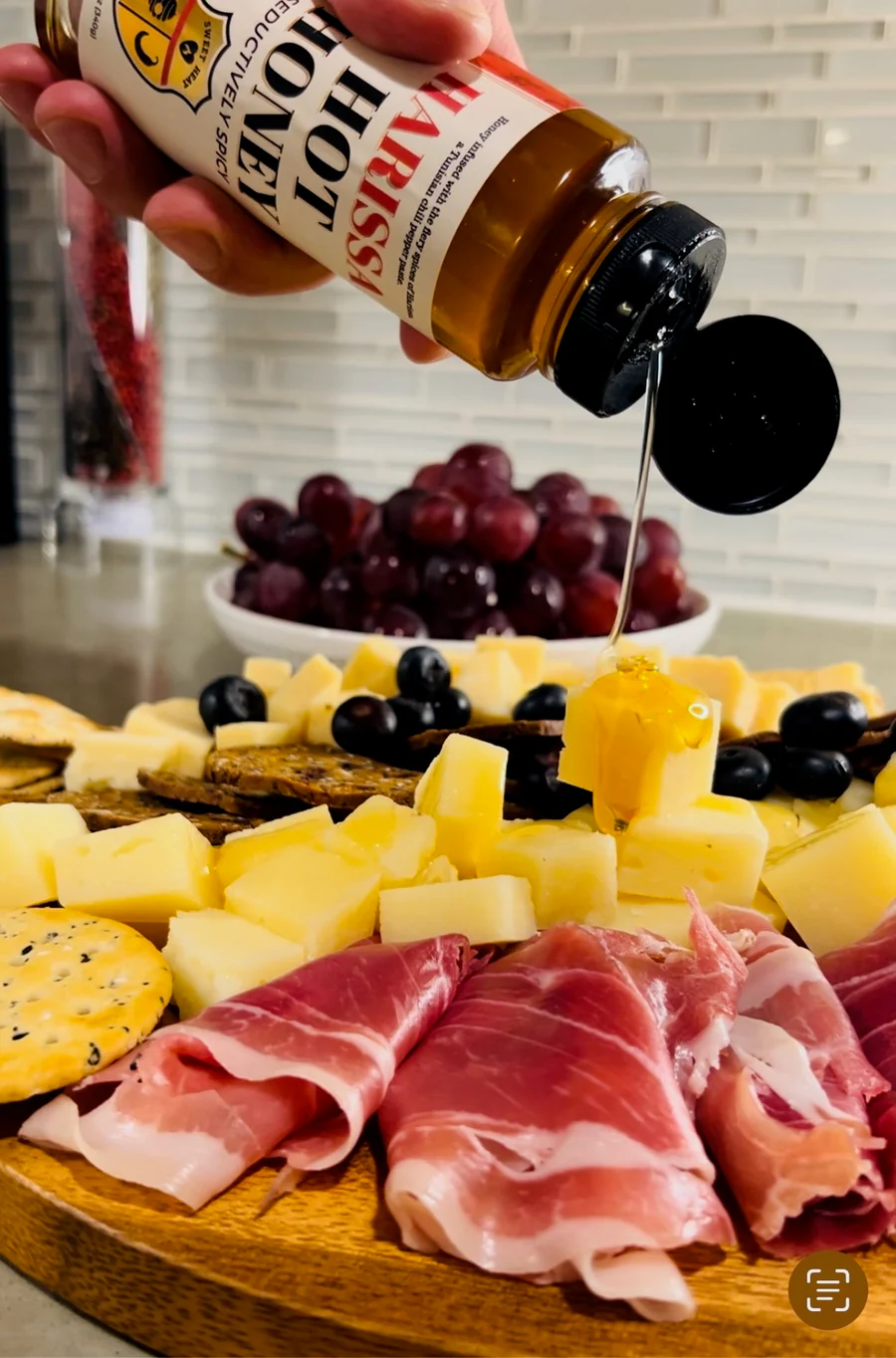
The honey comes from apiaries about 20 miles outside New York City and is infused over several days with the fiery spices of harissa. What emerges is far more layered than a simple sweet-and-spicy condiment. “You get sweetness first,” Gloribelle explains, “then heat, then all these other notes that keep building.”
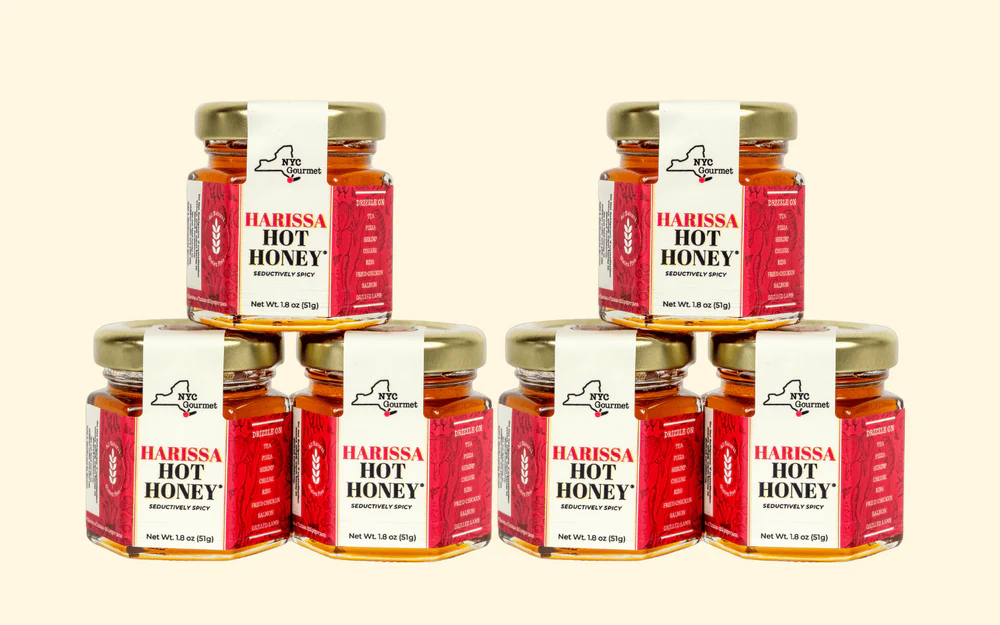
Unlike other hot honey options, it’s designed as a finishing ingredient: something that enhances what is already on the plate rather than overpowering it. Harissa Hot Honey is now available in squeeze bottles, mini jars, and gallon-sized containers for foodservice customers. It moves between home kitchens, restaurants, and commercial operations without changing what makes it distinctive. Some online customers even order the gallon size for their personal use.
Its applications continue to grow, but they’re still rooted in everyday cooking. Customers use it on everything from wings, roasted broccoli, and marinades to seasonal baking and even tea during colder months. “We are really just meeting people where they already are,” Gloribelle says. “Whether it is grilling season or baking season, it fits into how people cook at home.”
While the business has grown far beyond their first two kitchens, the idea behind it remains remarkably simple: bringing people together through food. “We just want to grow the dining table longer and longer.”
In many ways, Harissa Hot Honey is still exactly what it was at the beginning: a product shaped by real cooking, shared meals, and two people finding common ground through flavor. What started as an effort to impress each other has become a way to help others create those same connections around their own tables.