
“I was one of those little girls who was obsessed with making clothes for my Barbie and paper dolls.”
Angelique JulienFounder
“I never knew it could be a career.”
Long before she understood what pattern making was or dreamed of opening an atelier, Angelique Julien was designing wardrobes for her dolls. “I was making my own paper dolls because I wasn’t happy with their clothing”, she says.
Growing up in a small town in Arizona, fashion felt worlds away. She never considered that fashion could become a profession until she stumbled across the 50th anniversary issue of Seventeen magazine. “They posted all of these careers you could have, and they said, ‘You can be a fashion designer and go to FIT.’ I thought, WHAT?’ And that was that.” She never looked back.
After graduating high school, Angelique boarded a long Amtrak train to New York City and enrolled at the Fashion Institute of Technology. She studied fashion design, gravitating toward couture classes and the technical side of garment construction.
Breaking into the fashion industry took patience. Angelique graduated just before 9/11, entering one of the toughest job markets the industry had seen. Summers were spent waitressing in Nantucket while returning to New York to intern until one opportunity finally turned into a full-time position. Later, at Selia Yang Bridal, she found herself immersed in fittings and pattern making rather than design work.
There she realized she had found the work she truly loved.
“I really wanted to prove that it could be done the right way.”
After years of working inside small fashion businesses, Angelique developed a perspective that extended far beyond design. Because she worked alongside owners, pattern makers, cutters, and seamstresses, she saw firsthand how every decision affected the finished garment and the people making it. “I understand the margins being so super skinny,” she says. “I understand what’s on the line with even the smallest mistakes.”
While living in Los Angeles, Angelique watched the industry wrestle with growing conversations around transparency and ethics following the collapse of the Rana Plaza factory in Bangladesh. It forced her to ask herself what kind of company she wanted to build. “I really wanted to prove that it could be done the right way.”
For Angelique, “the right way” meant designing with integrity, intention, and care.So she launched her own clothing label built around those principles. “I started answering Craigslist ads for pattern makers,” she remembers. “That’s just how we used to do it.”
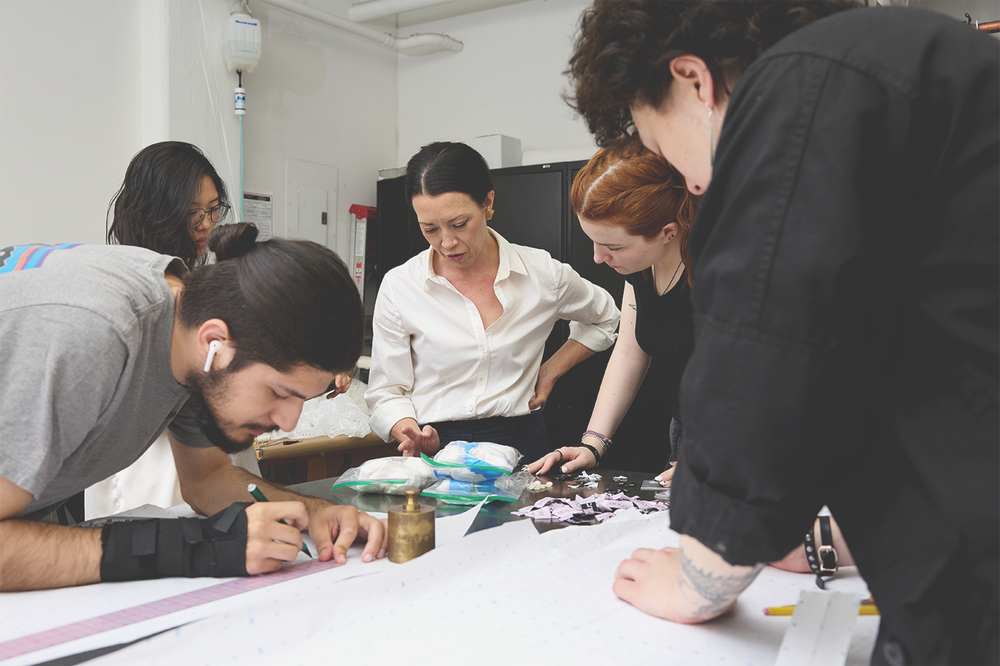
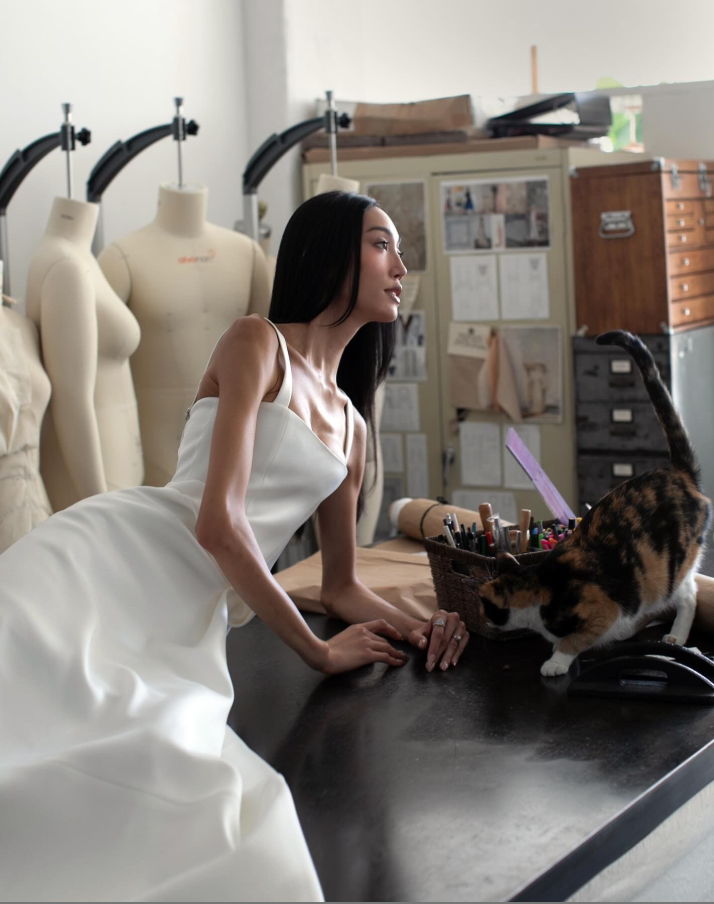
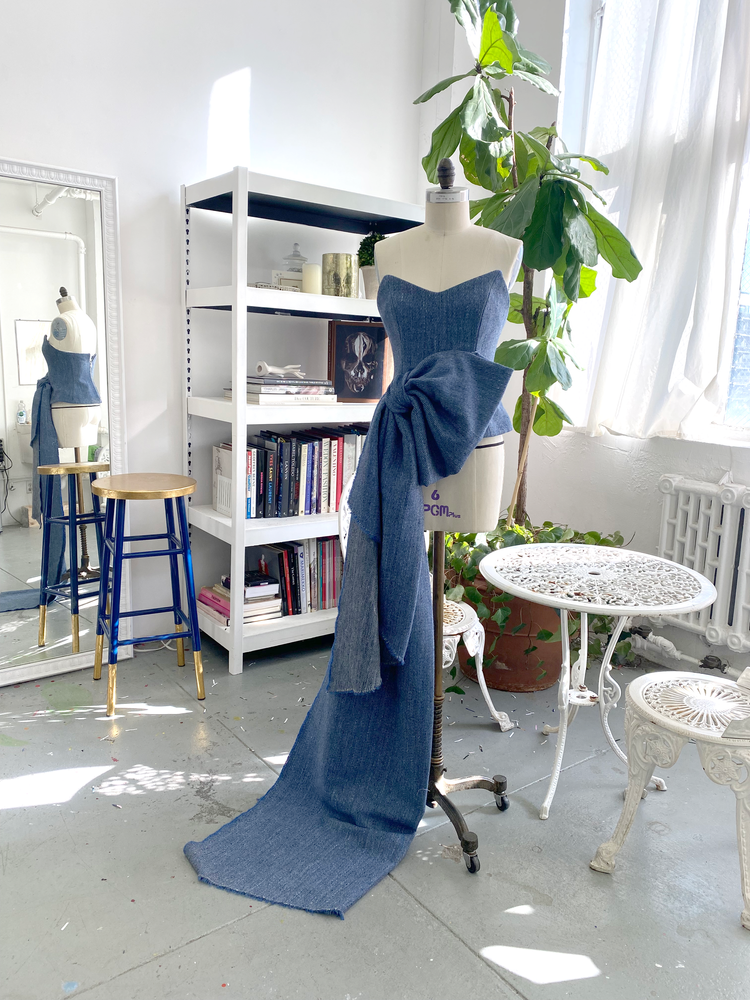
One client led to another and theTEN Atelier evolved naturally into a place where designers could bring ideas and work collaboratively through every stage of development, from draping and pattern making to fittings and production. Angelique enjoys moving between custom garments, bridal, and product development because every project brings a different challenge.
“I like to mix them up.”
What ties them together is the opportunity to help bring someone’s vision to life while making sure it is beautifully constructed and built to last.
“There’s something so amazing that happens when you’re actually building it with your hands.”
In addition to running theTEN Atelier, Angelique teaches draping as an adjunct professor at FIT, where she works with the next generation of fashion designers. “I think it’s really important to help the youth understand that AI will not take away this portion of it.”
For her, fashion is about far more than sketches on a screen. “There’s something so amazing that happens with a creative soul when you’re actually physically doing it and building it with your hands.”
She worries that when designers become too disconnected from the making process, they also become disconnected from their own creativity. Teaching gives her the opportunity to preserve those skills while encouraging students to approach fashion with both craftsmanship and intention.
She also finds tremendous energy in working with young designers. “They really love what they do.”
Looking ahead, Angelique is returning to FIT to pursue a master’s degree in Global Fashion Management while continuing to grow theTEN Atelier. She dreams of expanding the business into something inspired by the great Parisian maisons, a place where craftsmanship is celebrated, artisans are visible, and the public can better understand the work behind exceptional clothing.
“If it’s really made beautifully and with integrity,” she says, “it really is art.”